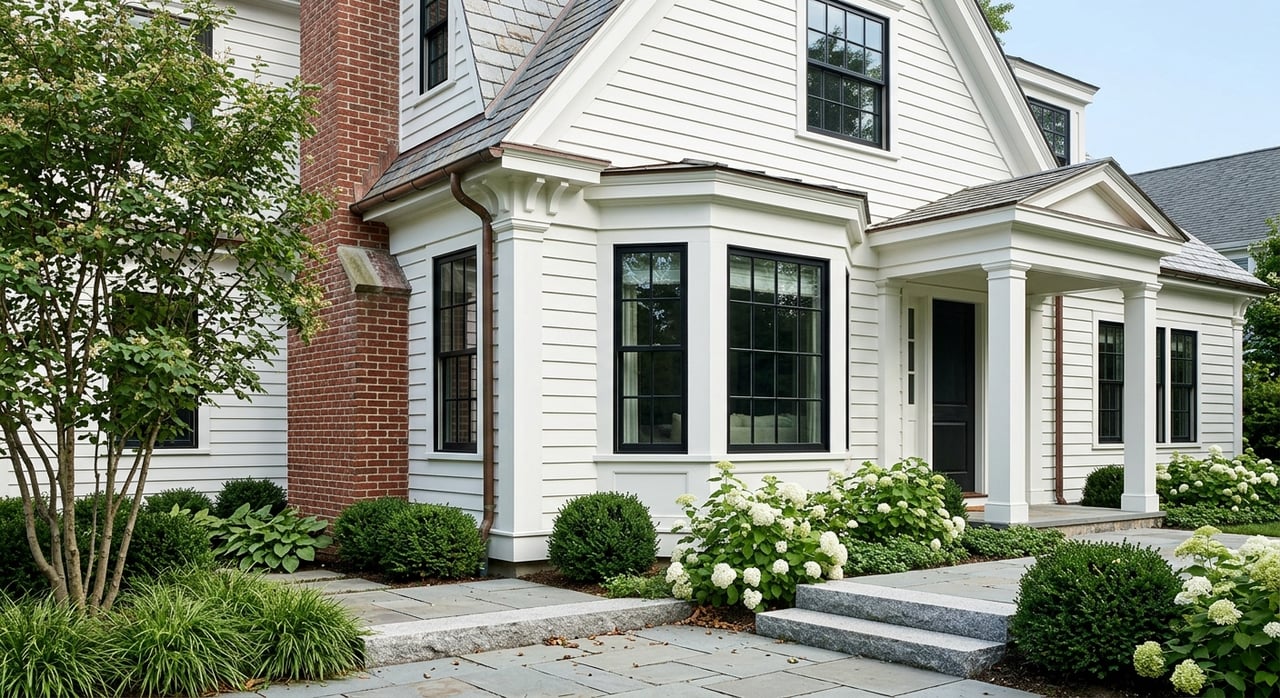
Ever wonder why one Brookline street feels full of ornate rooflines and bays, while another reads as formal, symmetrical, and almost quietly grand? If you are browsing homes in Brookline, understanding the town’s architecture can help you quickly make sense of what you are seeing and what kinds of properties may fit your taste. Brookline’s housing stock tells a layered story, and once you know the major styles, you can tour with more confidence and a sharper eye. Let’s dive in.
Brookline Architecture at a Glance
Brookline does not have one single architectural identity. Instead, the town developed in phases, with older homes concentrated more heavily in the southern section and major growth expanding during the 1886 to 1925 streetcar era along Beacon Street, Coolidge Corner, Washington Square, Brookline Village, and other transit corridors.
That growth pattern matters because it helps explain why Brookline can feel so varied from one pocket to the next. As development continued in areas like North Brookline, Fisher Hill, Chestnut Hill, and South Brookline, different architectural styles took hold and created distinct streetscapes.
Another key part of Brookline’s character is preservation. The town recognizes eight local historic districts, and many exterior changes in those districts, including some landscape changes, require review by the Preservation Commission. For you as a buyer or seller, that means many of Brookline’s most visually distinctive areas are also carefully protected.
Victorian Styles in Brookline
When people describe a Brookline home as Victorian, they are often talking about a broad family of late 19th-century styles rather than a single look. In Brookline, that can include Greek Revival, Italianate, Second Empire, Gothic Revival, Picturesque, and Panel Brick homes.
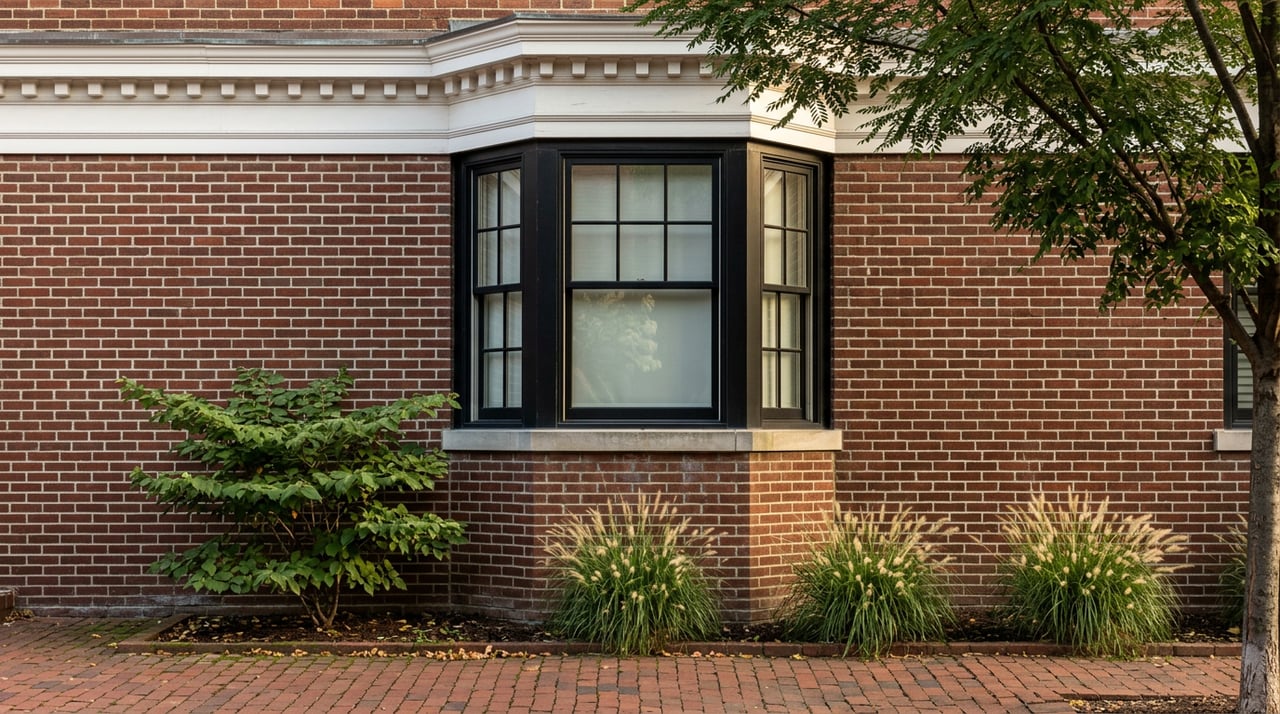
These houses often stand out for their visual drama. You may notice asymmetrical facades, mansard roofs, bracketed eaves, towers, bargeboards, decorative shingles, or ornate porches. Even if you do not know the formal style name, these details usually signal an older, more expressive design.
Where You’ll See Victorian Homes
Cottage Farm is one of Brookline’s clearest Victorian-era pockets. Local preservation materials identify Gothic Revival, Mansard, Queen Anne, and Georgian Revival as major styles there, along with smaller numbers of Shingle, Italianate, and Spanish examples.
Pill Hill offers another layered historic setting. There, you can find some of the area’s older surviving Federal and Greek Revival houses, along with later Mansard and Queen Anne examples on streets such as High Street and nearby blocks.
Brookline Village and North Brookline also preserve many late 19th-century forms. Around Beacon Street, Babcock Street, Coolidge Street, Naples Road, and Francis Street, you can still see the influence of Brookline’s earlier growth periods.
Colonial Revival in Brookline
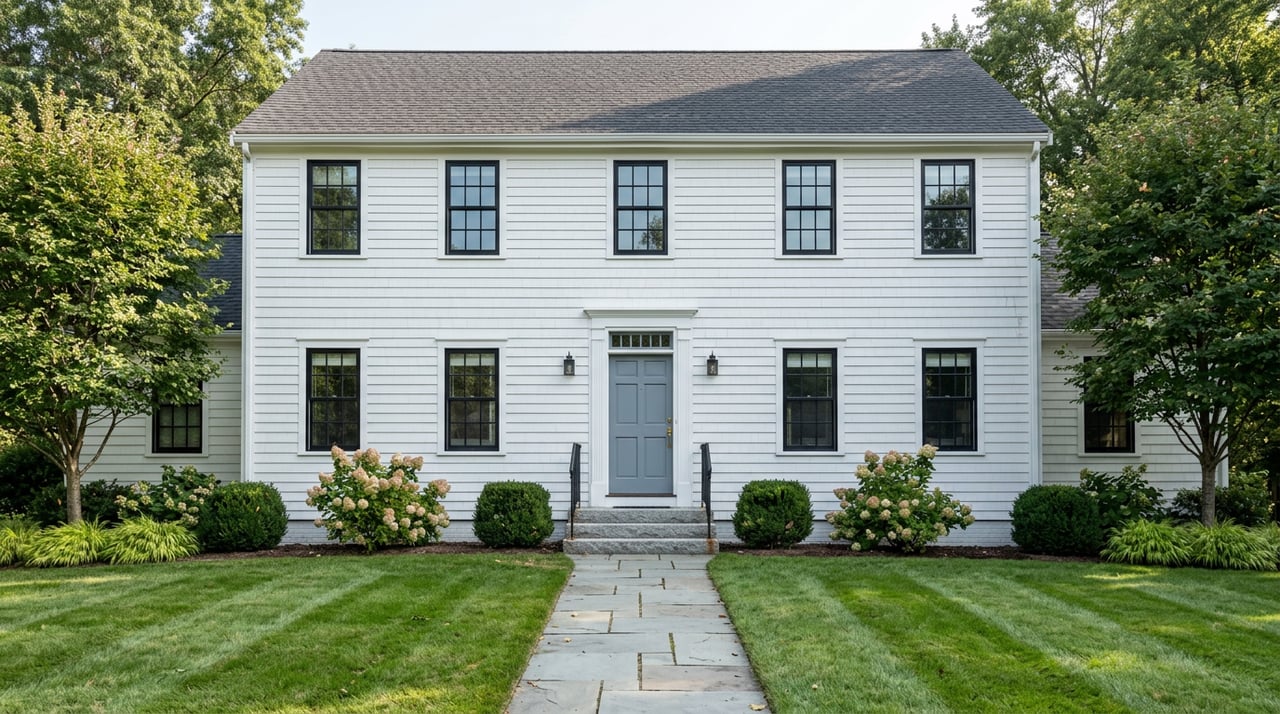
Colonial Revival is one of the most visible architectural styles in Brookline. It appears across many neighborhoods and became especially widespread from about 1890 to 1910, with continued influence after World War I.
This style often feels more formal and restrained than Victorian homes. Common features include symmetry, center entrances, fanlights, sidelights, columns, pedimented dormers, and sometimes gambrel roofs.
For many buyers, Colonial Revival homes strike a familiar balance. They often offer classic curb appeal and a timeless exterior presence, which is one reason the style remains so recognizable across Brookline.
Where You’ll See Colonial Revival Homes
You can find Colonial Revival homes in nearly every part of town, but several areas are especially useful if you want to compare examples. The Graffam subdivision between Naples Road and Babcock Street is one notable pocket.
You will also see Colonial Revival homes in Brookline Village and North Brookline, especially around Beals, Coolidge, and Naples. Larger examples also appear in Fisher Hill, Longwood, and Chestnut Hill.
Shingle Style Homes in Brookline
Shingle Style is one of Brookline’s signature architectural looks, especially in Chestnut Hill and Crowninshield. These homes usually feel less rigid than Colonial Revival houses and more unified in surface and shape.
Typical cues include continuous wood shingles, broad gable or gambrel rooflines, rounded forms, banded windows, and informal massing. Instead of emphasizing decorative trim, Shingle Style homes often create impact through their overall shape and flowing exterior skin.
If you like homes that feel established, architectural, and somewhat understated from a distance, this style often stands out. It can look substantial without feeling overly ornate.
Where You’ll See Shingle Style Homes
Chestnut Hill is one of the strongest areas for Shingle Style architecture in Brookline. The style is especially associated with homes on streets including Circuit Road, Norfolk Road, and Rawson Road.
Crowninshield is another important pocket. Its district report notes that the vast majority of its buildings are architect-designed, and many fall into Shingle Style, Arts and Crafts, Colonial Revival, or Georgian Revival categories.
Tudor Revival and Arts and Crafts Homes
As Brookline continued to grow in the early 20th century, Tudor Revival and Arts and Crafts homes became more prominent. These styles are especially tied to later suburban development in southern Brookline, Chestnut Hill, and nearby hill areas.
Tudor Revival homes are usually easy to spot. Look for steep roofs, half-timbering, stucco or brick exteriors, tall chimneys, and small-paned or leaded windows.
Arts and Crafts homes tend to feel more grounded and natural. They often feature lower-slung forms, natural materials, porch-centered compositions, and a strong visual connection to the landscape.
Where You’ll See Tudor and Arts and Crafts
Chestnut Hill North is especially helpful for understanding both styles. According to the local district report, the west half includes more Queen Anne, Medieval Revival, Colonial Revival, and Shingle examples in clapboard or shingle construction, while the east half includes more masonry-based Arts and Crafts, American Colonial, and Tudor Revival homes.
Arts and Crafts homes are also tied to Fisher Hill and Chestnut Hill more broadly. In Crowninshield, you can compare Arts and Crafts interpretations alongside Shingle and Colonial Revival homes within a relatively concentrated area.
Older and Mixed Revival Styles
Brookline’s streetscapes often blend older and newer revival influences. In some areas, you may see Federal or Georgian references alongside later Colonial Revival work on the same general stretch.
That mix is part of what makes Brookline so interesting to walk and tour. Rather than presenting a single repeated house type, many neighborhoods show how architectural tastes changed over time while still maintaining an overall sense of place.
In Pill Hill, for example, surviving Federal and Greek Revival houses connect to Brookline’s earlier history. In other neighborhoods, medieval-influenced homes from the 1890s and early 1900s add yet another layer to the town’s architectural variety.
Modern and Contemporary Brookline Homes
Brookline is best known for its historic and revival-era housing, but modern architecture is part of the picture too. It is simply less dominant and tends to appear as one-off houses, later additions, or carefully placed infill rather than as a prevailing neighborhood pattern.
Preservation materials identify 192 Fairway Road and 1033 Boylston Street as significant mid-century modern houses in Brookline. The same reports also note an International-style poolhouse from 1960 and an Acorn Structures house from 1979 in the Chestnut Hill North area.
If you are drawn to contemporary design, Brookline can still offer it. Just expect it to appear in smaller numbers and often in ways that respond to the surrounding streetscape.
Quick Visual Cues to Know
If you want a faster way to identify styles while touring homes, these cues can help:
- Victorian / picturesque: asymmetry, towers or bays, ornate porches, mansard roofs, bargeboards, decorative shingles
- Colonial Revival: symmetry, center entrances, fanlights, sidelights, columns, pedimented dormers, gambrel roofs
- Shingle Style: continuous shingles, broad rooflines, rounded forms, banded windows, informal massing
- Tudor Revival: steep roofs, half-timbering, stucco or brick, tall chimneys, leaded or small-paned windows
- Arts and Crafts: natural materials, lower-slung forms, porch-centered design, integration with landscape
- Modern / contemporary: clean lines, minimal ornament, low or flat roofs, larger glass areas, restrained materials
Neighborhood Pockets to Watch
If you are house hunting and want to match architectural styles to location, these Brookline pockets are especially helpful:
- Cottage Farm / Longwood: Gothic Revival, Mansard, Queen Anne, Georgian Revival, and some early English Cottage influence
- Pill Hill / High Street Hill: Federal, Greek Revival, Mansard, Queen Anne, and later revival houses
- Chestnut Hill North: Shingle, Colonial Revival, Arts and Crafts, American Colonial, and Tudor Revival
- Crowninshield: Shingle, Arts and Crafts, Colonial Revival, Georgian Revival, and some Craftsman or Spanish Colonial examples
- Brookline Village / North Brookline / Coolidge Corner: mixed late 19th-century and streetcar-era homes, including Colonial Revival, Mansard, and medieval-influenced examples
Why Style Matters When You Buy or Sell
Architectural style is not just a design detail. In Brookline, it can shape how a home fits into its streetscape, how buyers respond emotionally to it, and in some locations, what kinds of exterior changes may require review.
For buyers, knowing the styles can help you narrow your search more efficiently. If you love symmetry and traditional facades, you may be drawn to Colonial Revival areas. If you prefer more texture and irregular forms, Victorian or Shingle Style pockets may feel more compelling.
For sellers, understanding your home’s architectural identity can also improve presentation. A well-marketed Brookline home often benefits from clear positioning that highlights its defining features, whether that means historic detailing, classic proportions, or a rare modern design.
Brookline’s homes are part of a long architectural timeline, and that is one reason the town remains so visually rich. If you are thinking about buying or selling in Brookline and want thoughtful guidance on how a home’s style, setting, and presentation shape value, the Kennedy Lynch Team can help you navigate the market with a local, experienced perspective.
FAQs
What architectural styles are most common in Brookline homes?
- Brookline includes many late 19th-century Victorian-era homes, along with Colonial Revival, Shingle Style, Tudor Revival, Arts and Crafts, and smaller numbers of modern and contemporary houses.
Where can you see Victorian homes in Brookline?
- Cottage Farm, Pill Hill, Brookline Village, and North Brookline are some of the best-known areas for Victorian and late 19th-century homes, including Gothic Revival, Mansard, and Queen Anne examples.
Where are Colonial Revival homes located in Brookline?
- Colonial Revival homes appear across much of Brookline, with notable concentrations in the Graffam area, Brookline Village, North Brookline, Fisher Hill, Longwood, and Chestnut Hill.
What makes a Shingle Style home different in Brookline?
- Brookline Shingle Style homes often feature continuous wood shingles, broad rooflines, rounded forms, and informal massing rather than heavy ornament.
Are there modern homes in Brookline?
- Yes. Brookline has a smaller but important modern layer, including notable mid-century modern examples and later contemporary homes, especially in parts of Chestnut Hill North.
Do historic districts affect Brookline homes?
- Yes. Brookline recognizes eight local historic districts, and many exterior changes, along with some landscape changes, require review by the Preservation Commission in those districts.